
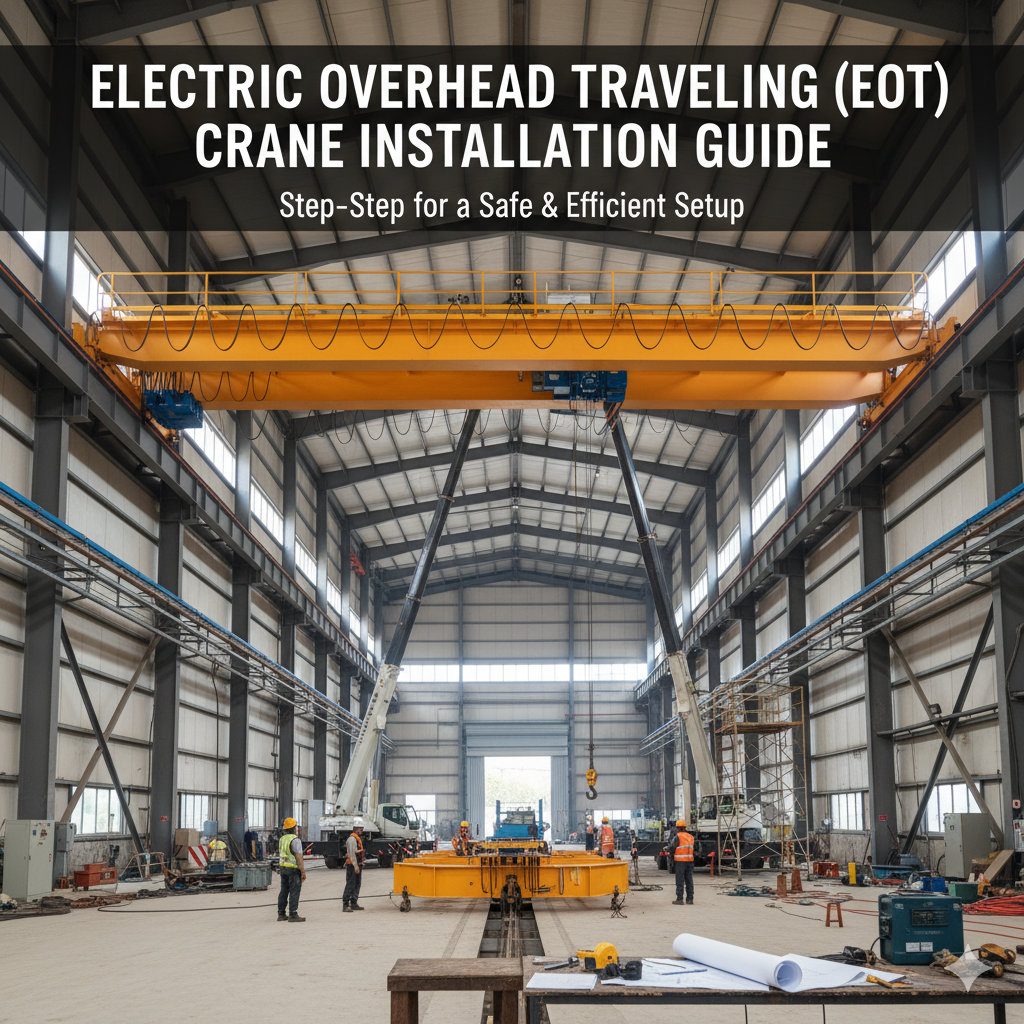
Installing an Electric Overhead Travelling (EOT) crane is a major step toward improving the efficiency and safety of material handling in any industrial or manufacturing setup. EOT cranes are designed to lift and move heavy loads within a defined area, reducing manual effort and saving valuable time. However, the installation of such equipment requires careful planning, accurate measurements, and strict adherence to safety standards.
This guide will walk you through every step of the EOT crane installation process — from preparation to final testing — in a simple and easy-to-understand way.
1. Understanding What an EOT Crane Is
Before we jump into the installation, it’s important to understand what an EOT crane actually is.
An Electric Overhead Travelling (EOT) crane is a type of overhead crane that runs on an elevated runway system along the length of a factory or workshop. It consists of:

- Bridge: The main structure that spans the area where lifting operations are done.
- Crab or Trolley: The moving unit that carries the hoist and travels across the bridge.
- Hoist: The device used for lifting and lowering the load.
- Runway: The tracks or beams on which the crane moves along the building length.
- Electrical components: These include control panels, motors, and wiring systems that power the crane.
EOT cranes can be single girder (one bridge beam) or double girder (two bridge beams), depending on the load requirements.
2. Pre-Installation Preparation
A successful installation begins with proper preparation. Here are the key steps to get started:
a) Site Inspection
Before installing an EOT crane, inspect the site where it will be placed. Check:
- The height and width of the area.
- The strength of the building structure.
- The availability of power supply.
- Space for maintenance and movement.
The site should be clean, leveled, and free from obstructions.
b) Foundation and Runway Structure
The crane’s performance depends heavily on the strength of its runway beams and support columns. The runway girders must be aligned perfectly and mounted on strong columns or brackets.
If it’s a new building, ensure that the foundation design is suitable to bear the crane load, including dynamic forces during operation.
c) Tools and Equipment
Gather all necessary tools, including:
- Measuring instruments
- Torque wrench
- Lifting slings
- Alignment tools
- Electrical testing devices
It’s best to have an installation checklist before starting.
3. Assembling the Main Components
Once the preparation is complete, the installation of the EOT crane begins.
a) Installing the Runway Beams
The runway beams are the first components to be installed.
- Use precision instruments to align them perfectly in a straight line.
- Make sure both sides of the runway are at the same level.
- Secure them tightly using bolts and brackets.
b) Installing End Carriages
End carriages are fitted on both ends of the crane bridge. They have wheels that move along the runway beams.
- Ensure the wheel alignment is correct to prevent uneven wear.
- Lubricate the wheels and bearings properly.
c) Assembling the Bridge Girders
Next, the bridge girders are lifted and connected to the end carriages.
- Use cranes or hoists for safe lifting.
- The connection bolts should be tightened as per the manufacturer’s torque specifications.
- Double-check the diagonal measurements to confirm squareness.
d) Mounting the Trolley and Hoist
The trolley (or crab) carries the hoist and travels along the bridge girders.
- Install the trolley carefully on the bridge.
- Mount the hoist on the trolley using secure fasteners.
- Ensure that the hoist’s rope or chain moves freely without obstruction.
4. Electrical Installation
The electrical system is the heart of an EOT crane.
It controls the crane’s movement, lifting, and safety systems. Follow these steps carefully:

a) Wiring and Power Supply
- Connect power cables to the control panel and motors according to the wiring diagram provided by the manufacturer.
- Make sure all cables are properly insulated and protected from heat and mechanical damage.
b) Control System Setup
- Install the control pendant or remote control system.
- Test the control buttons for up, down, forward, backward, left, and right operations.
- Emergency stop buttons should work properly and cut off the power immediately when pressed.
c) Earthing and Safety
- Ensure proper earthing of all electrical equipment.
- Use circuit breakers and fuses to protect against overloads or short circuits.
5. Alignment and Testing
Before using the crane, thorough testing is essential to ensure safety and accuracy.
a) Mechanical Alignment
Check that:
- The runway beams are parallel.
- The end carriages move smoothly.
- The hoist rope winds evenly on the drum.
- All bolts and nuts are properly tightened.
b) No-Load Testing
Operate the crane without any load first.
- Move it in all directions and check for smooth operation.
- Observe for unusual sounds or jerks.
- Verify the limit switches are functioning correctly.
c) Load Testing
Once the no-load test is satisfactory, perform a load test using a test weight equal to the crane’s rated capacity.
- Lift and lower the load slowly.
- Check for deflection, vibrations, or mechanical strain.
- Make sure the brakes hold the load securely.
6. Final Inspection and Documentation
After successful testing, conduct a final inspection before handing over the crane for regular use.
Inspect:
- Structural components for cracks or deformation.
- Electrical connections for tightness.
- Safety devices such as overload protection and limit switches.
Once everything is approved, prepare detailed installation and testing reports. This should include all measurements, alignment data, and load test results.
Keep these records safe — they are useful for future maintenance and inspections.
7. Safety Tips and Maintenance
Even after installation, regular maintenance and safety checks are crucial.
- Train operators to use the crane safely and responsibly.
- Inspect the crane daily before starting work.
- Lubricate moving parts regularly.
- Replace worn-out ropes, hooks, or electrical parts immediately.
- Schedule a professional inspection at least once a year.
8. Conclusion
Installing an Electric Overhead Travelling (EOT) crane is not just about fitting mechanical and electrical parts together — it’s about ensuring precision, safety, and long-term reliability. With careful planning, skilled technicians, and adherence to safety standards, you can achieve a smooth installation that serves your operation for years to come.
A properly installed EOT crane not only enhances productivity but also ensures a safer working environment for everyone involved.
Remember, a good installation today ensures a lifetime of safe lifting tomorrow.